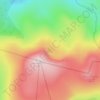
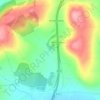
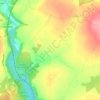
Rathdangan topographic map
Click on the map to display elevation.
Rathdangan
Evidence of habitation is shown by a Bronze Age burial cist, a fort dating from at least the eight-century and a Norman moat at Killamoat. A 1668 survey records 18 houses in the village. Due to its mountainous elevation, in the severe winters of 1947, 1963 and 1982, Rathdangan was isolated for weeks. In 1985 the town was caught up in the moving statues phenomena gripping Ireland when people claimed to see the Rathdangan Marian Year Virgin Mary statue move.
About this map

Name: Rathdangan topographic map, elevation, terrain.
Average elevation: 228 m
Minimum elevation: 141 m
Maximum elevation: 570 m
Other topographic maps
Click on a map to view its topography, its elevation and its terrain.




Baltinglass
A nineteenth-century explanation is found in Samuel Lewis' A Topographical Dictionary of Ireland, where he says that the name, "according to most antiquaries," comes from Baal-Tin-Glas, meaning the "pure fire of Baal," and that this suggests that the area was a centre for "druidical worship".
Average elevation: 163 m