

Make a donation
Costa Brava topographic map
Click on the map to display elevation.
Make a donation
About this map

Name: Costa Brava topographic map, elevation, terrain.
Location: Costa Brava, 17320, Spain (40.70377 1.94159 42.70377 3.94159)
Average elevation: 247 m
Minimum elevation: -1 m
Maximum elevation: 2,870 m
Make a donation
Other topographic maps
Click on a map to view its topography, its elevation and its terrain.
Madrid
Madrid lies in the centre of the Iberian peninsula on the southern Meseta Central, 60 km south of the Guadarrama mountain range and straddling the Jarama and Manzanares river sub-drainage basins, in the wider Tagus River catchment area. With an average altitude of 650 metres (2,130 ft), Madrid is the second…
Average elevation: 671 m
Majorca
Mallorca and the other Balearic Islands are geologically an extension of the fold mountains of the Betic Cordillera of Andalusia. They consist primarily of sediments deposited in the Tethys Sea during the Mesozoic era. These marine deposits have given rise to calcareous rocks which are often fossiliferous. The…
Average elevation: 61 m
Tenerife
Teide National Park, located in the center of the island, is also a UNESCO World Heritage Site. It includes Mount Teide, which has the highest elevation in Spain, and the highest among all the islands in the Atlantic Ocean. It is also the third-largest volcano in the world, when measured from its base. Another…
Average elevation: 281 m
Make a donation
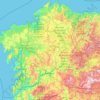
Galicia
The interior of Galicia is characterized by a hilly landscape; mountain ranges rise to 2,000 m (6,600 ft) in the east and south. The coastal areas are mostly an alternate series of rias and beaches. The climate of Galicia is usually temperate and rainy, with markedly drier summers; it is usually classified as…
Average elevation: 456 m
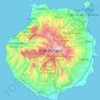
Gran Canaria
Gran Canaria is located in the Atlantic Ocean in a region known as Macaronesia about 150 kilometres (93 mi) off the northwestern coast of Africa and about 1,350 km (840 mi) from Europe. With an area of 1,560 km2 (602 sq. mi) and an altitude of 1,956 m (6,417 ft) at Morro de la Agujereada, Gran Canaria is the…
Average elevation: 335 m
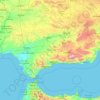
Andalusia
Andalusia sits at a latitude between 36° and 38° 44' N, in the warm-temperate region. In general, it experiences a hot-summer Mediterranean climate, with dry summers influenced by the Azores High, but subject to occasional torrential rains and extremely hot temperatures. In the winter, the tropical…
Average elevation: 378 m
Make a donation
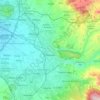
Granada
Spain > Andalusia > Comarca de la Vega de Granada
Granada (Spanish: [ɡɾaˈnaða], locally [ɡɾaˈna]) is the capital city of the province of Granada, in the autonomous community of Andalusia, Spain. Granada is located at the foot of the Sierra Nevada mountains, at the confluence of four rivers, the Darro, the Genil, the Monachil and the Beiro. Ascribed to…
Average elevation: 829 m
Tenerife
Teide National Park, located in the center of the island, is also a UNESCO World Heritage Site. It includes Mount Teide, which has the highest elevation in Spain, and the highest among all the islands in the Atlantic Ocean. It is also the third-largest volcano in the world, when measured from its base. Another…
Average elevation: 281 m
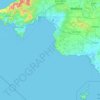
Palma
Spain > Balearic Islands > Palma
Palma is a major city and seaport located in the southwest of Mallorca, a western Mediterranean island belonging to the Balearic Islands archipelago. The land area of the city is about 21.355 square kilometres (8.245 sq mi) with an altitude of 13 metres (43 feet) above sea level.
Average elevation: 49 m
Make a donation
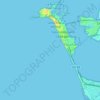
Cádiz
Spain > Andalusia > Bay of Cádiz
The Baluarte de la Candelaria (fortress or stronghold of Candlemas) is a military fortification. Taking advantage of a natural elevation of land, it was constructed in 1672 at the initiative of the governor, Diego Caballero de Illescas. Protected by a seaward-facing wall that had previously served as a…
Average elevation: 1 m
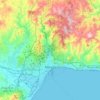
Málaga
Spain > Andalusia > Málaga-Costa del Sol
Like many of the military fortifications that were constructed in Islamic Spain, the Alcazaba of Málaga featured a quadrangular plan. It was protected by an outer and inner wall, both supported by rectangular towers, between which a covered walkway led up the slope to the Gibralfaro (this was the only…
Average elevation: 276 m
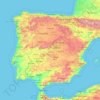
Iberian Peninsula
The Iberian Peninsula encompasses 583,254 km2 and has very contrasting and uneven relief. The mountain ranges of the Iberian Peninsula are mainly distributed from west to east, and in some cases reach altitudes of approximately 3000 mamsl, resulting in the region having the second highest mean altitude (637…
Average elevation: 351 m
Make a donation
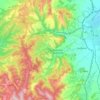
Muntanyola
The village of Muntanyola is a-typical in that it does not have a center. 75% of the municipality's area consists of forested hills between 650 and 1000 m. altitude, with scattered farms and fields. The build-up area is in the higher elevations and mainly consists of two real estate developments - in Spanish:…
Average elevation: 678 m
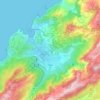
Catalonia
In the Mediterranean area, summers are dry and hot with sea breezes, and the maximum temperature is around 26–31 °C (79–88 °F). Winter is cool or slightly cold depending on the location. It snows frequently in the Pyrenees, and it occasionally snows at lower altitudes, even by the coastline. Spring and…
Average elevation: 559 m
Zaragoza
On 1 January 2019 the population of the city of Zaragoza was 706,904, within its administrative limits on a land area of 1,062.64 square kilometres (410.29 square miles), ranking fifth in Spain. It is the 32nd most populous municipality in the European Union. The population of the metropolitan area was…
Average elevation: 701 m
Make a donation
Make a donation
Córdoba
The differences in elevation in the Valley are very small, ranging from 100 and 170 metres above sea level, with the city proper located at an average altitude of roughly 125 metres above sea level. The landscape of the valley is further subdivided in the piedmont connecting with the Sierra, the fluvial…
Average elevation: 281 m

Arriate
Spain > Andalusia > Serranía de Ronda
In spite of the scarcity of facts known about the history of Arriate, judging by the caves in the rocks on the banks of the river, it is possible that man's presence in these lands comes from very remote times. Its geographical situation in an area of soft topography and water, as well as the possibilities of…
Average elevation: 658 m
Make a donation

Tenerife
Teide National Park, located in the center of the island, is also a UNESCO World Heritage Site. It includes Mount Teide, which has the highest elevation in Spain, and the highest elevation among all the islands in the Atlantic Ocean. It is also the third-largest volcano in the world when measured from its…
Average elevation: 281 m
Samos
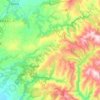
Samos is near the eastern mountains of Galicia (the mountains of Lóuzara, Serra do Oribio and Mountains of Albola). The mean altitude is over 700 m and the highest elevation is the mountain of O Oribio at 1,443 m. The Sarria River, a tributary of the Miño River, collects water from the western slopes of the…
Average elevation: 742 m

Baeza
The town stands at a high elevation about 3 miles (4.8 km) from the right bank of the Guadalquivir in the Loma de Úbeda. Under the Romans, the town was known as 'Beatia'. Following its conquest by the Visigoths, Beatia was the seat of a bishopric of Baeza (viz.). From the beginning of the seventh century it…
Average elevation: 485 m
Make a donation
Seville
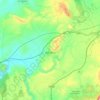
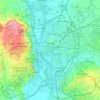
Seville has an area of 141 km2 (54 sq mi), according to the National Topographic Map (Mapa Topográfico Nacional) series from the Instituto Geográfico Nacional – Centro Nacional de Información Geográfica, the country's civilian survey organisation (pages 984, 985 and 1002). The city is situated in the…
Average elevation: 35 m
Valencia
Spain > Valencian Community > Comarca de València
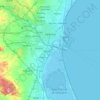
The maximum of precipitation occurs in the Autumn, coinciding with the time of the year when cold drop (gota fría) episodes of heavy rainfall—associated to cut-off low pressure systems at high altitude— are common along the Western mediterranean coast. The year-on-year variability in precipitation may be,…
Average elevation: 37 m
Madrid
Madrid lies in the centre of the Iberian peninsula on the southern Meseta Central, 60 km south of the Guadarrama mountain range and straddling the Jarama and Manzanares river sub-drainage basins, in the wider Tagus River catchment area. With an average altitude of 650 metres (2,130 ft), Madrid is the second…
Average elevation: 671 m
Make a donation
Pamplona
The climate of Pamplona is classified as an oceanic climate (Köppen climate classification: Cfb) with influences of a semicontinental Mediterranean climate. Due to global warming and stronger summer heat waves in the 21st century, it is also on the boundary with a humid subtropical climate. Precipitation…
Average elevation: 449 m
Burgos
At an elevation of 865 metres (2,838 ft), the city of Burgos lies in the transition zone between a Warm-summer Mediterranean climate (Köppen Csb) and an Oceanic climate (Köppen Cfb), with some continental influence resulting from its distance from the sea and higher altitude. Burgos' climate features chilly…
Average elevation: 907 m
Salamanca
With an altitude of over 800 meters, Salamanca has a warm-summer Mediterranean climate (Csb) according to the Köppen climate classification, with some cold semi-arid climate (BSk) climatic influences, resulting in large diurnal temperature variations, with hot summers and chilly winters, and nearly-semi-arid…
Average elevation: 812 m

Canary Islands
The Canary Islands, especially Tenerife, Gran Canaria, Fuerteventura, and Lanzarote, are a major tourist destination, with over 12 million visitors per year. This is due to their beaches, subtropical climate, and important natural attractions, especially Maspalomas in Gran Canaria, Teide National Park, and…
Average elevation: 16 m
Make a donation
La Palma
In a programme transmitted by the British Broadcasting Corporation BBC Horizon broadcast on 12 October 2000, two geologists (Day and McGuire) cited La Grieta as proof that half of the Cumbre Vieja had moved towards the Atlantic Ocean (Day et al. 1999, and Ward and Day, 2001). They postulate that this process…
Average elevation: 296 m

Majorca
Mallorca and the other Balearic Islands are geologically an extension of the fold mountains of the Betic Cordillera of Andalusia. They consist primarily of sediments deposited in the Tethys Sea during the Mesozoic era. These marine deposits have given rise to calcareous rocks which are often fossiliferous. The…
Average elevation: 57 m

Make a donation

Jardines del Triunfo
Spain > Andalusia > Comarca de la Vega de Granada > Granada
Average elevation: 719 m
Make a donation
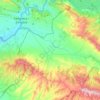
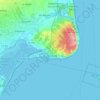
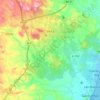
Granada
Spain > Andalusia > Comarca de la Vega de Granada
Granada (Spanish: [ɡɾaˈnaða], locally [ɡɾaˈna]) is the capital city of the province of Granada, in the autonomous community of Andalusia, Spain. Granada is located at the foot of the Sierra Nevada mountains, at the confluence of four rivers, the Darro, the Genil, the Monachil and the Beiro. Ascribed to…
Average elevation: 829 m
Make a donation

Canary Islands
The Canary Islands, especially Tenerife, Gran Canaria, Fuerteventura, and Lanzarote, are a major tourist destination, with over 12 million visitors per year. This is due to their beaches, subtropical climate, and important natural attractions, especially Maspalomas in Gran Canaria and Mount Teide (a World…
Average elevation: 13 m
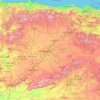
Castile and León
The morphology of Castile and León consists, for the most part, of the northern half of the Meseta Central (Meseta Norte) and a belt of mountainous reliefs. The Meseta Central is a high plateau with an average altitude close to 800 m (2,600 ft) above sea-level; it is covered by deposited clay materials that…
Average elevation: 788 m
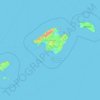
Balearic Islands
Located in the west of the Mediterranean Sea, the Balearic Islands have mostly typical hot-summer Mediterranean climates (Köppen: Csa) with some high altitude areas having a Warm-summer Mediterranean climate (Köppen: Csb) in the island of Majorca. The semi-arid climate (Köppen: BSh and BSk) is also found in…
Average elevation: 9 m
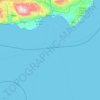
Almeria
During the winter, daily maximum temperatures tend to stay around 17–18 °C (63–64 °F). At night, the minimum temperature is usually around 8–10 °C (47–50 °F). This makes Almería the city with the second warmest winters in Spain and Europe, just after Cádiz. The city only receives 26 days of…
Average elevation: 97 m
Make a donation
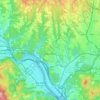
Catalonia
In the Mediterranean area, summers are dry and hot with sea breezes, and the maximum temperature is around 26–31 °C (79–88 °F). Winter is cool or slightly cold depending on the location. It snows frequently in the Pyrenees, and it occasionally snows at lower altitudes, even by the coastline. Spring and…
Average elevation: 559 m
Make a donation
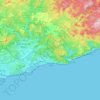
Estepona
Spain > Andalusia > Costa del Sol Occidental
Estepona (Spanish pronunciation: [esteˈpona]) is a town and municipality in the comarca of the Costa del Sol, southern Spain. It is located in the province of Málaga, part of the autonomous community of Andalusia. Its district covers an area of 137 square kilometers in a fertile valley crossed by small…
Average elevation: 265 m
Parque Natural Sierra de Tejeda, Almijara y Alhama
Spain > Andalusia > Comarca de Alhama
Average elevation: 754 m
Make a donation
Marbella
Spain > Andalusia > Costa del Sol Occidental
There are five geomorphological units: the Sierra Blanca, the Sierra Blanca piedmont (foothills), the lower hill country, the plains and the coastal dunes. The Sierra Blanca is most centrally located in the province, looming over the old village. This mountain range has three peaks: La Concha, located further…
Average elevation: 216 m
Jimena de la Frontera
Spain > Andalusia > Campo de Gibraltar
Jimena de la Frontera enjoys a moderate Mediterranean climate. There are 3,000 hours of sunshine per year, which contributes to average temperatures of between 18 and 20 °C (64 and 68 °F). However, the rainfall pattern differs significantly from the rest of southern Spain, due to the topography of the Strait…
Average elevation: 269 m
Make a donation

Almadén de la Plata
Almadén de la Plata is a municipality in Seville, Spain. It had a population of 1,696 in 2005 and has population density of 6.6 people per km2, with a total area of about 256 km2. It is located at an altitude of 450 meters and is 59 kilometers from Seville.
Average elevation: 418 m

Make a donation

Make a donation
Palma de Mallorca
Spain > Balearic Islands > Palma
Palma is a major city and seaport located in the southwest of Mallorca, a western Mediterranean island belonging to the Balearic Islands archipelago. The land area of the city is about 21.355 square kilometres (8.245 sq mi) with an altitude of 13 metres (43 feet) above sea level.
Average elevation: 49 m
Make a donation
Santiago de Compostela
According to a medieval legend, the remains of the apostle James, son of Zebedee were brought to Galicia for burial, where they were lost. Eight hundred years later the light of a bright star guided a shepherd, Pelagius the Hermit, who was watching his flock at night to the burial site in Santiago de…
Average elevation: 258 m
Cullera
The mountain of Cullera, known as Munt de l'Or or Muntanya de l'Or, is the last mountain in the Iberian System before the Mediterranean Sea. It has an altitude of 233 meters. The historical parts of the city are to the south, and the modern tourist district is to the east, looking to the sea.
Average elevation: 18 m
Make a donation

Tenerife
Teide National Park, located in the center of the island, is also a UNESCO World Heritage Site. It includes Mount Teide, which has the highest elevation in Spain, and the highest elevation among all the islands in the Atlantic Ocean. It is also the third-largest volcano in the world when measured from its…
Average elevation: 281 m
Make a donation

Parc Nacional d'Aigüestortes i Estany de Sant Maurici
Spain > Catalonia > Alta Ribagorça
The park has an elevation range of 1600 to 3000 metres and contains four major vegetation zones: lower montane, upper montane, subalpine and alpine.
Average elevation: 2,162 m

Make a donation

Make a donation

Valencia
Spain > Valencian Community > Comarca de València
The maximum of precipitation occurs in the Autumn, coinciding with the time of the year when cold drop (gota fría) episodes of heavy rainfall—associated to cut-off low pressure systems at high altitude— are common along the Western mediterranean coast. The year-on-year variability in precipitation may be,…
Average elevation: 37 m
Madrid
Madrid lies in the centre of the Iberian peninsula on the southern Meseta Central, 60 km south of the Guadarrama mountain range and straddling the Jarama and Manzanares river sub-drainage basins, in the wider Tagus River catchment area. With an average altitude of 650 metres (2,130 ft), Madrid is the second…
Average elevation: 671 m
Make a donation